Authenticity: An Internal Journey, Not a Content Format

I wake up every morning flooded with thoughts, ideas, and one recurring dream that centers around JDV.
As I go on my morning walk—my way of grounding these thoughts—I try to make sense of them.
Sometimes I succeed. Other times, not so much. I attempt to trace a path, or perhaps a purpose, for these gifts.
Today’s dominant thought was authenticity.
What does it truly mean to be authentic?
It is a word that has been used so frequently, and across so many contexts, that it has begun to lose its
gravity. A phenomenon that has always fascinated me—what I like to call dilution. When a word is
repeated endlessly, stripped from its original depth, fragmented by overuse, its meaning slowly
dissolves.
Authenticity is a word that has suffered from this phenomenon.
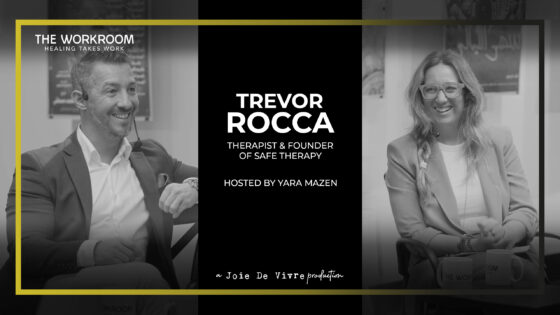
Through my podcast, I have asked nearly all of my guests the same question: What is authenticity to
you?
Their answers have stayed with me—some echoing, some evolving—as time passed. What became
increasingly clear is what I would describe as the expansive nature of awareness. This expansion, this
collective deepening, is what makes the shift we are living through feel so real, so undeniable.
Which leads us to a pressing question:
What is authenticity in a fast-evolving world?
A world shaped by rapid technological advancement, dramatic global shifts, and an unprecedented rise
in individual and collective consciousness.
So—what is authenticity, really?
Philosophically speaking, the term authentic has been defined in two ways. In its stronger sense, it refers
to something “of undisputed origin or authorship.” In a weaker sense, it means being “faithful to an
original” or a “reliable, accurate representation,” as described by the Stanford Encyclopedia of
Philosophy.
In everyday language, authenticity is often simplified to being true to oneself—real, honest, sometimes
even nostalgic or vintage.
As a character trait, authenticity is celebrated as courage in a fabricated world. It is perceived as rawness,
as unfiltered truth. It has come to mean that if I film myself in my pajamas, in my bedroom, speaking
casually into a camera, then I must be authentic.
If I take my audience—a word I use with reluctance—through my morning routine, or show them how I
get ready for the day, then I am supposedly sharing my “real” life.
But let me ask you something:
If I choose to be intentional, scripted, attentive to beauty, and meticulous about what I share—does that
make me unauthentic?
Or does authenticity run far deeper than that?
My own reflection leads me here:
Authenticity is not a static state—it is a quest.
We are constantly changing. To be authentic is not to freeze oneself in one version, but to honor that
evolution. It is to meet each new layer of ourselves—even the uncomfortable ones—with acceptance
and reverence, recognizing them as valid expressions of who we are becoming.
Authenticity is not a content style.
It is an internal journey.
When we are genuinely seeking alignment, that is when we can say we are being as authentic as we are
capable of being—today.
Our depth, much like the universe itself, is ever-moving and ever-changing. And so is what we choose to
share with the world.
What matters is alignment.
Alignment is the real treasure—when what you choose to express reflects your heart’s desire, when that
desire is in harmony with your soul’s purpose, and when both move in rhythm with the mind and body.
When all parts sing the same song.
So I leave you with the same question I ask my guests, and myself—again and again:
What is authenticity to you?
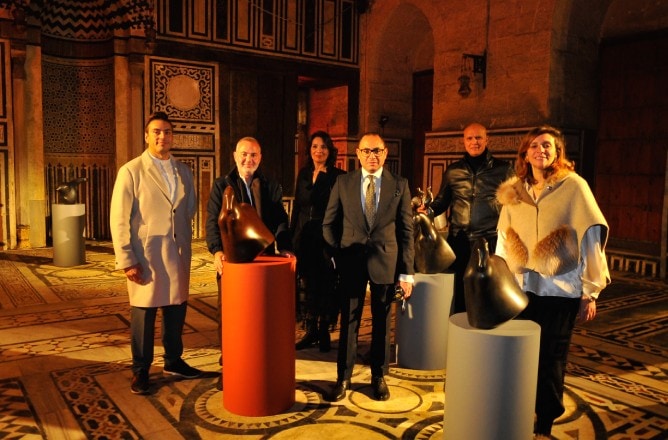
Events: The Path Exhibition – Khaled Zaki, Le LAB.