An Immersive Experience

These days, the term immersive experience is used very loosely.
A few lights on a wall, no clear narrative, no emotional arc and suddenly, it is labeled immersive.
This was only the second immersive experience by Le Lab that I truly felt in my bones.
The first was with an artist who transformed their gallery at Walk of Cairo into a mystical, avatar-like world where sound, light, paint, and presence converged into something genuinely otherworldly.
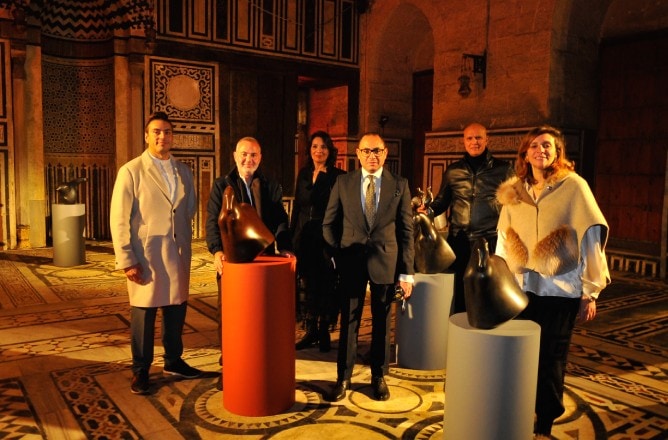
So when I attended the opening exhibition of Khaled Zaki, my expectations were already shaped not by hype, but by lived experience. By a quiet knowing of where immersion should reside.
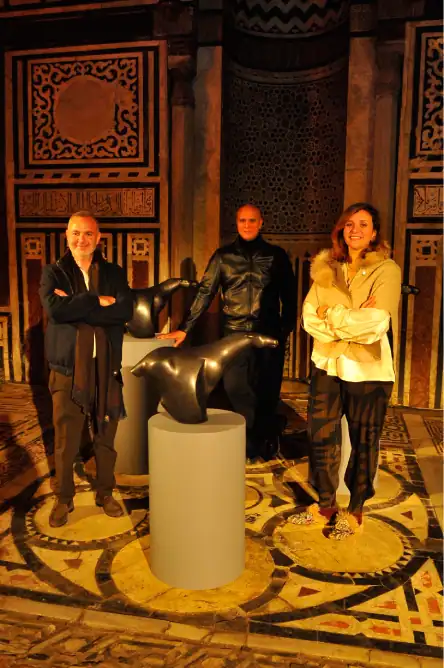
As I got into my car and headed toward Darb El Ahmar, anticipation naturally began to build. The journey itself carries weight. I was dropped off in front of a beautifully lit building, and instantly, I knew I was heading into something exceptional. I knew I had arrived the moment I saw the dim, reddish lights diffusing from Kobet El Ghory.
Darb El Ahmar if you’ve ever been there is alive with vendors, pedestrians, and movement. A fullness of life. As the most beautiful places in Cairo often are.
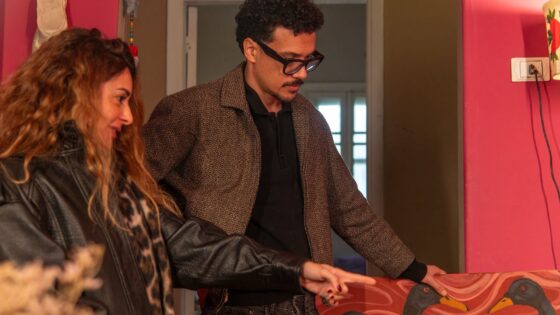
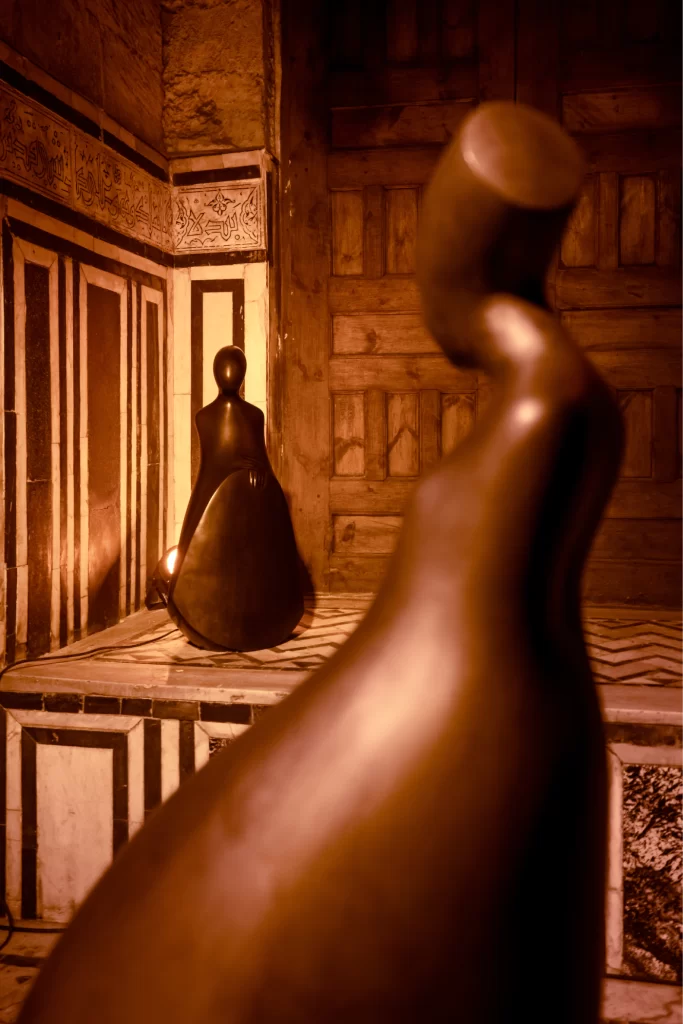
Before entering, I took a few breaths to ground myself to prepare to meet people while staying in my body, something I’ve been practicing for a while now. I walked steadily along the path leading into the building, all lit in a warm reddish-orange glow. Later, I learned that this was intentionally designed.
As soon as I entered, the first layer of the experience met me through scent. Aromatic bokhoor filled the space. I stepped into the hall and walked around slowly, feeling into it. I often do this to find safety, to land before engaging. This time, grounding came easily.
Once I had arrived—both in the space and in myself—I began to follow the path laid out for the exhibition.
There is no other way to describe it: it was magical.
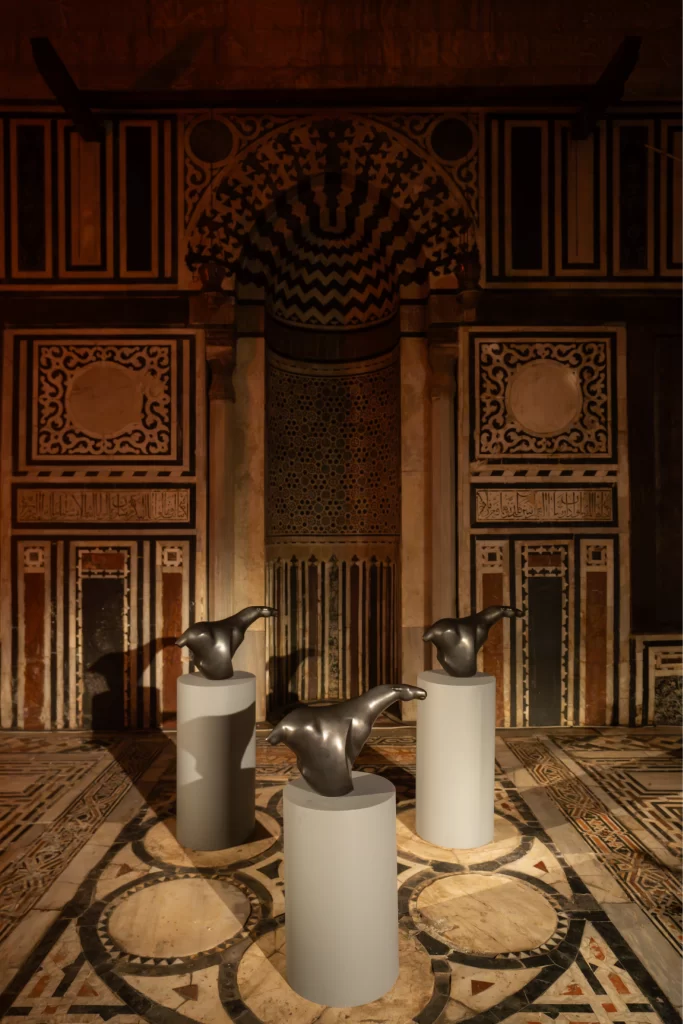
The light design, the music, the aroma, and Khaled Zaki’s elegant, flowing Darwish sculptures merged seamlessly. They almost moved. All of it unfolding within walls that do not simply hold history, but radiate mysticism and sacredness.
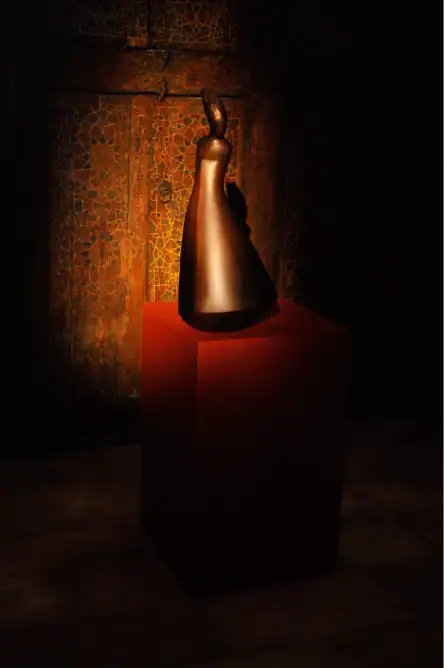
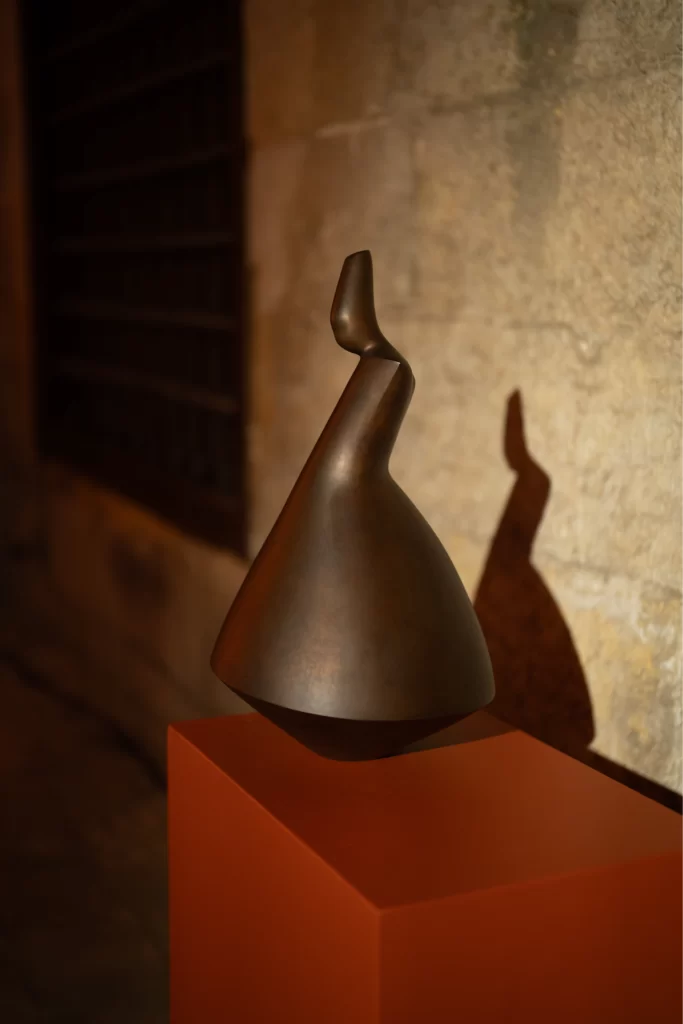
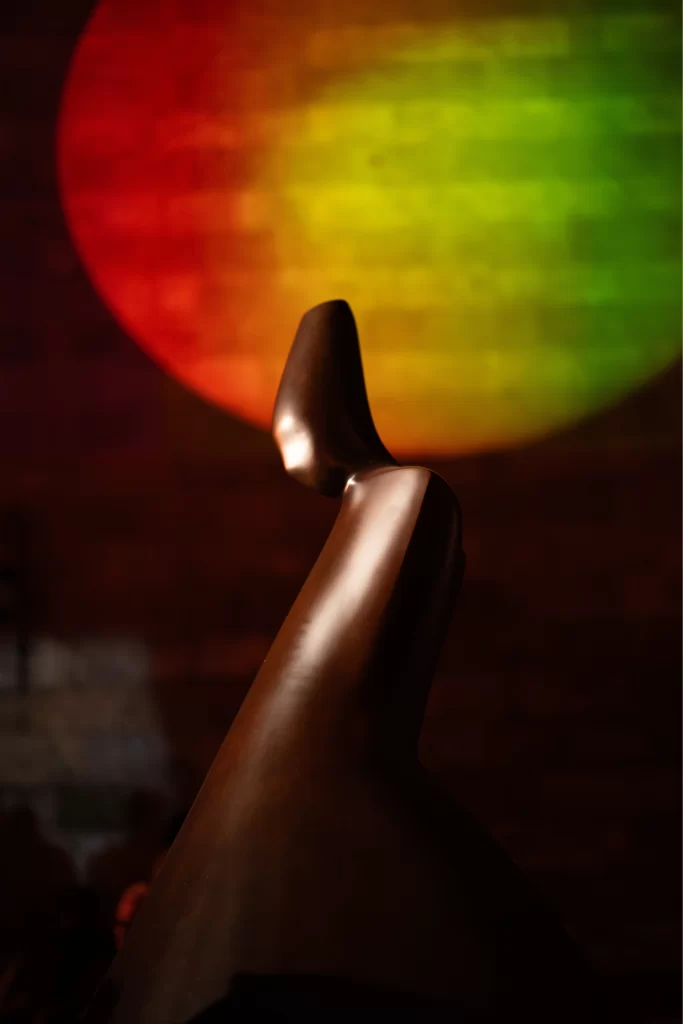
Then came the performance the element that truly brought the exhibition’s narrative home.
The singer, her voice deeply rooted in the Islamic Sufi tradition, filled the space with power and reverence. Alongside her, dancers with long black braided ponytails moved with intensity and precision. It felt like an initiation into the Year of the Fiery Horse, cosmically aligned as it begins mid-February.
Through their movement, their voices, their presence, I felt preparation. I found myself swaying, physically moved by the rhythm and energy and I wasn’t alone. In the final act, a Darwish dressed in black entered the space, grounding all the carefully cultivated energy into something both fierce and contained.
I am accustomed to seeing Sufi rituals dressed in white or green. But the choice of black shifted everything. It carried the same force I felt from the women with braided ponytails. I felt the power of darkness, not as absence, but as depth. As authority. As resolve.
In times when the world feels unhinged, this kind of assertiveness, precision, and grounded power feels necessary.
Throughout the performance, the sculptures seemed to come alive almost responding, almost conversing with the movement and sound around them.
As I reflected on this night of reverence and mysticism, one realization became clear: owning one of these sculptures would mean taking home the entire narrative. The energy. The memory. The experience itself.
And that is how you exhibit art.
That is how you create an immersive experience.
Thank you Khaled Zaki and Le Lab for this mystical night.
And thank you to the entire team behind this deeply considered experience.